Employer-Migrant Worker Relationships in the Middle East: Exploring scope for internal labour market mobility and fair migration

Current sponsorship regimes in the Middle East have been criticized for creating an asymmetrical power relationship between employers and migrant workers – which can make workers vulnerable to forced labour. Essential to the vulnerability of migrant workers in the Middle East is that their sponsor controls a number of aspects related to their internal labour

Employer-Migrant Worker Relationships in the Middle East: Exploring scope for internal labour market mobility and fair migration Read More »

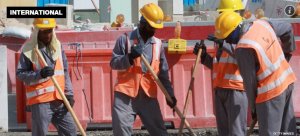
NOT JUST KAFALA: QATAR’S BAND-AID TREATMENT FOR A DEEP WOUND DOES NOT RECOGNISE 6 MAIN SYSTEMIC FAILURES

13 February 2016, Migrants-Rights Qatar’s failure is due largely to its stubborn stand of not recognising migrant workers as critical players in national building, deserving of equal status. It is also in part due to weak implementation of existing regulations, and a stranglehold over any form of independent rights-based social work. With growing criticism of

NOT JUST KAFALA: QATAR’S BAND-AID TREATMENT FOR A DEEP WOUND DOES NOT RECOGNISE 6 MAIN SYSTEMIC FAILURES Read More »

Scroll to Top